

The EMSO physical access service was launched in April 2022 and, after almost four years, it has reached a stable and mature phase. The service offers access to EMSO Regional Facilities to perform experiments in real ocean conditions; providing technical, scientific and logistics support. Projects can have a technological goal or a scientific one, although these disciplines are strongly intertwined when talking about ocean monitoring. Deployments can last a few days but also more than one year, allowing to capture seasonality influence on the experiment. Logistics for offshore deployments can be complex and proper planning is needed to execute the project the right way. These facts expand the time between the project proposal submission and the delivery of results in the shape of reports and data. Today, however, we are happy to present the first results of the programme, providing the links to the reports and datasets related to some of the projects:
Future Ocean Observation Drifter (FOOD)
CalcUlating the strength of the Plastic pump In counteracting the Deep export of Oceanic carbon (CUPIDO)
Levels and air-sea exchange of persistent organic pollutants in the marginal sea of Europe: contribution to the global monitoring effort AQUA-GAPS/MONET
TRIPLE-VTESTS
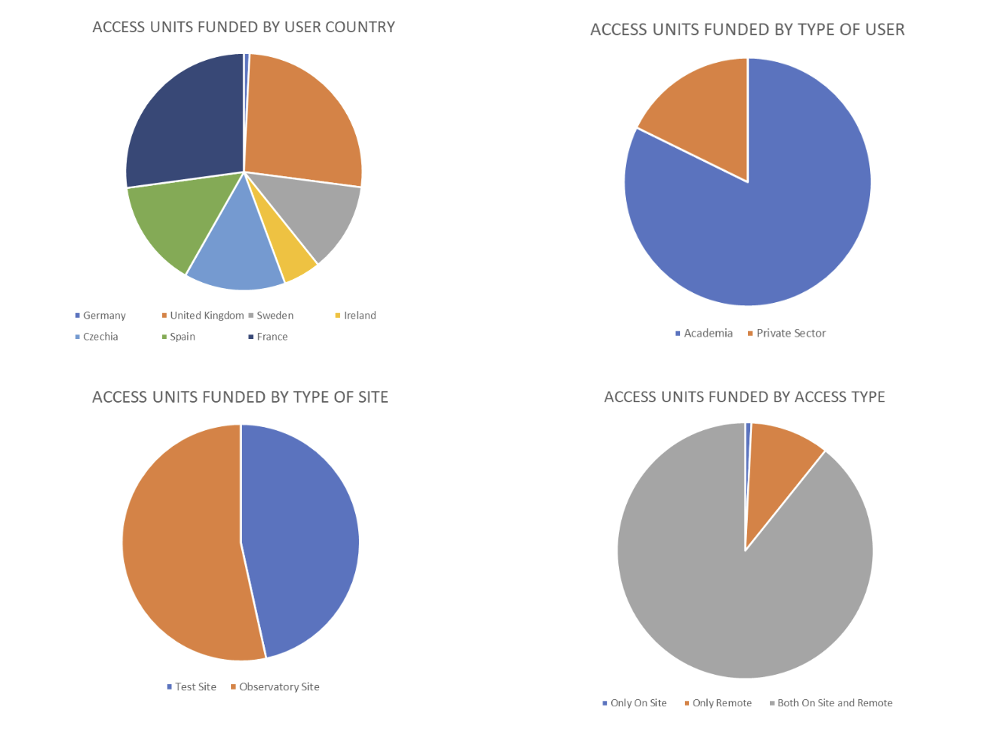
Until today, 13 projects have been granted, providing users with 128k€ in funds and an equivalent of 1.3M€ in access units (1823 Access Units). Users are exclusively from European countries, with the United Kingdom as the main user, closely followed by France. Most access units have been funded to public institutions and a wide majority of projects required both on site and remote access. Observatory sites, more offshore, have provided most access units, but closely followed by test sites, availing of their easy logistics and cabled infrastructure.
“EMSO ERIC’s physical access service is showing its capability to attract a wide variety of users and it is offering the right environment for the companies and academic institutions to test their ideas and developments in real ocean conditions” Simo Cusi, EMSO ERIC Engineering and Logistics Officer
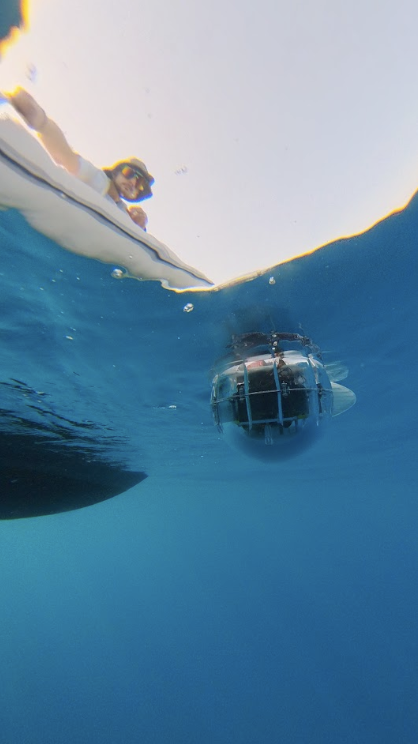
Tests of a drifter with a mechanical energy harvesting system; 2025 Call. M. Kvassay
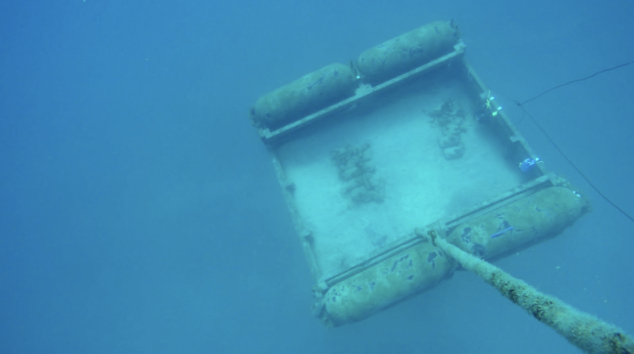
Experimental pod with first seagrass transplants for habitat restoration and CO2 capture; 2024 Call. Seagrass Blue
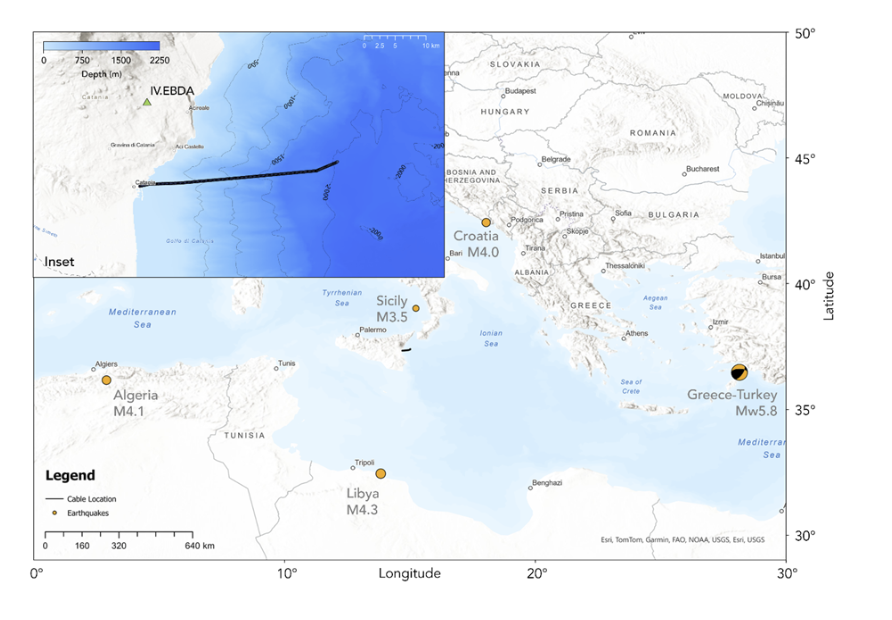
Five earthquakes detected using DAS with an optical fibre off Catania; 2023 Call. M. Belal
