

Developing the next generation of scientific instrumentation tools and methods for sensing marine life represents the core goal of the ANERIS (operAtional seNsing lifE technologies for maRIne ecosystemS) project.
This EU project, in which EMSO ERIC is involved with its shallow-water test sites, OBSEA and SmartBay, in pioneering continuous, AI-driven biodiversity monitoring, was highlighted during the 2026 edition of the “Giornata Mondiale degli Oceani – Conoscere, Comprendere, Convivere” (World Oceans Day: Know, Comprehend, Coexist), held in Genoa from 6 to 8 June.
As this EU-funded initiative approaches its final phase, the spotlight is directly on Case Study 1 (CS1), titled “High-temporal resolution marine life monitoring in RI observatories”. This study successfully demonstrated how the integration of advanced sensing tools and artificial intelligence enables continuous, high-frequency biological observations right in our oceans, specifically targeting both macrofauna and phytoplankton to capture two distinct levels of species sizes.
Over 500 Days of Continuous Monitoring in European Waters
Field tests were conducted across two strategic coastal underwater observatories:
- EMSO OBSEA (Spain, operated by UPC)
- EMSO SmartBay (Ireland, operated by the Marine Institute)
Despite facing harsh marine conditions, including severe structural damage caused by Storm Eowyn in the Irish Sea in early 2025, the test sites achieved more than 500 days of long-term operational deployment, validating outstanding resilience and data continuity.
The Core Innovation: Two Automated Workflows
The breakthrough of Case Study 1 lies in combining cutting-edge commercial instruments with custom technologies developed by the ANERIS consortium. These advancements are split into two Operational Marine Biology (OMB) workflows, driven by next-generation algorithms:
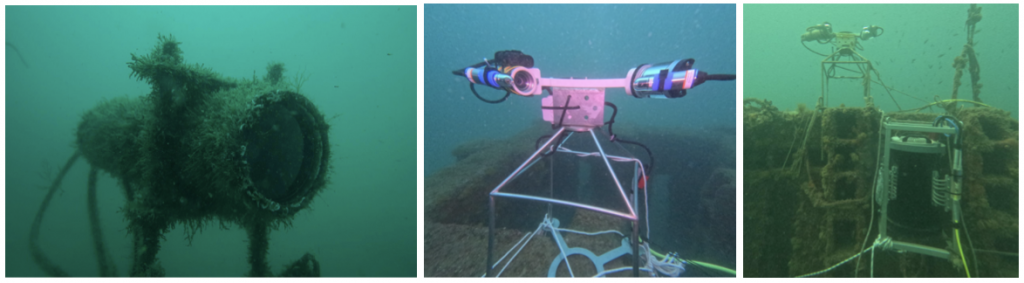
- Automated Plankton Monitoring (OMB1): This workflow uses advanced AI pipelines (AIES-PHY and AIES-ZOO) paired with specialized sensors (CytoSub and UVP6). What it does: It automatically tracks plankton communities in real-time, measuring their size, biomass, and composition.
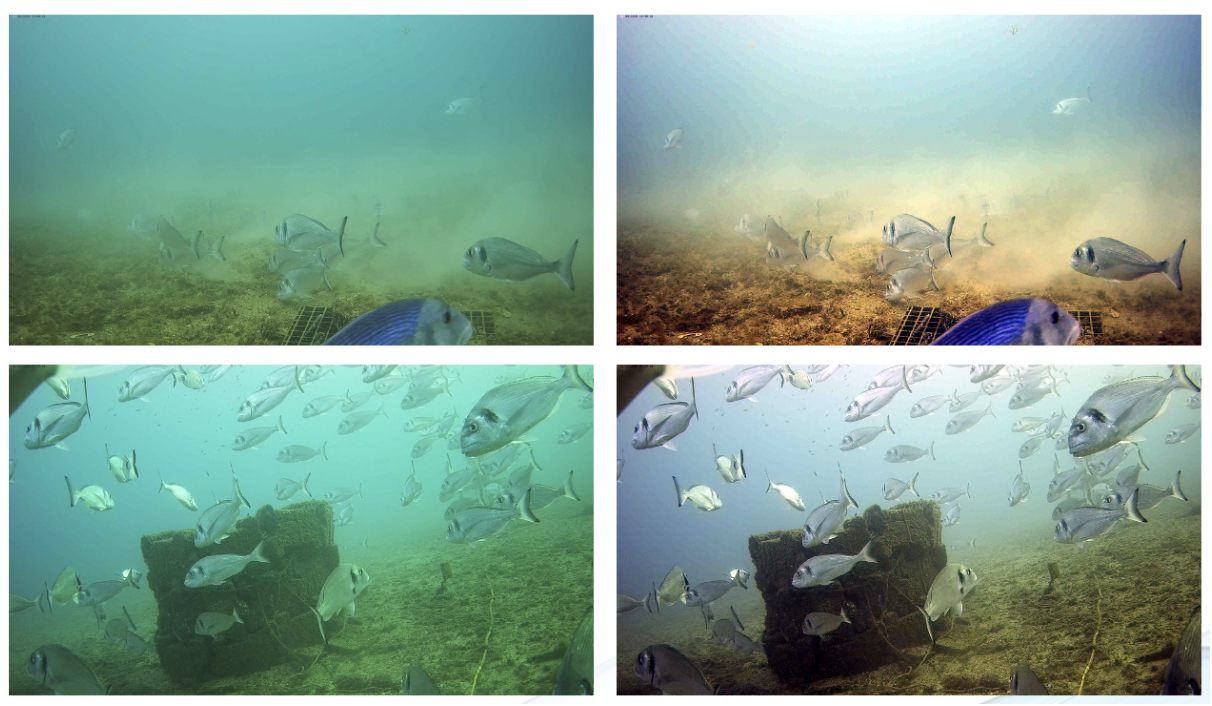
- Automated Macrofauna Monitoring (OMB2): This setup combines a multi-camera underwater system (EMUAS) with the ATIRES image-enhancement tool and the AIES-MAC AI pipeline. What it does: It cleans up murky underwater footage in real-time, allowing next-generation computer vision algorithms (YOLO) to instantly detect, track, and classify fish and benthic species presence.
By the end of the project, the project team will work to transform the massive volume of automated technological data collected into actionable ecological indicators:
“Our main focus is reinforcing the ecological interpretation of the collected data, implementing automated Quality Control flags, and refining our latest state-of-the-art algorithms – YOLO-based pipelines- for macrofauna species detection.”, says Matias Carandell, Universitat Politècnica de Catalunya (UPC, which acts as CS1 leader), and EMSO OBSEA team member.
The upcoming steps include embedding threshold-based biological alerts (e.g., sudden plankton blooms) directly into the Grafana data viewer dashboard and developing advanced user APIs so scientists can easily examine outliers and spot previously unseen species missed by the AI training.
For a complete overview of the project’s achievements, visit the official ANERIS website.
Acknowledgments
Case Study 1 Contributors: Perrine Paul-Gilloteaux (CNRS), Jean-Olivier Irisson, Julie Coustenoble, Camille Catalano and Camille Sant (Sorbonne University), Catina Geselschap and Douwe Dreef (CytoBuoy), Nir Zagdanski (University of Haifa), Luz Amadei and Wout Decrop (VLIZ), Sebastian Luna-Valero (EGI Foundation), Paul Gaughan and Ander de Lecea (Marine Institute), Matias Carandell, Marc Nogueras, Joaquin del Rio and Ikram Bghiel (Universitat Politècnica de Catalunya), Simo Cusí (EMSO-ERIC)